+86-18967386982

 English
 Español
 عربى
عربى
Home / News / Industry News / Outdoor Sun-Protection Monitoring Seamless Tags: UV-Sensing Activewear Labels
Industry News


Content
Outdoor apparel is judged by how well it handles the sun. Runners, hikers, cyclists and children at summer camp spend hours under ultraviolet radiation, and buyers increasingly want garments that can show how much protection is being delivered rather than simply claim it on a hangtag. That shift has pushed a narrow but fast-growing class of functional trims into product development meetings: outdoor sun-protection monitoring seamless tags.
These UV-sensing indicator labels are printed or bonded onto the fabric itself. They flex with the garment, sit flat against the skin, and change appearance as ultraviolet intensity rises. For a brand, that turns a hidden technical property into something a wearer can read at a glance.
Two systems work together here: a seamless, tagless construction that keeps the label comfortable against the skin, and a UV-responsive pigment layer that reacts to sunlight.
A sun-protection monitoring seamless tag is a functional apparel label applied without a sewn-in edge, carrying a UV-sensitive indicator. Instead of a stiff woven or printed tag stitched into a neckline, the element is transferred onto the inside or outside of the garment as a flat, soft layer that moves with the fabric.
Three characteristics define the category:
Because the indicator is integrated into the trim rather than added as a separate gadget, the garment keeps its original silhouette and hand feel. That matters on lightweight summer fabrics, where a heavy patch is immediately noticeable.
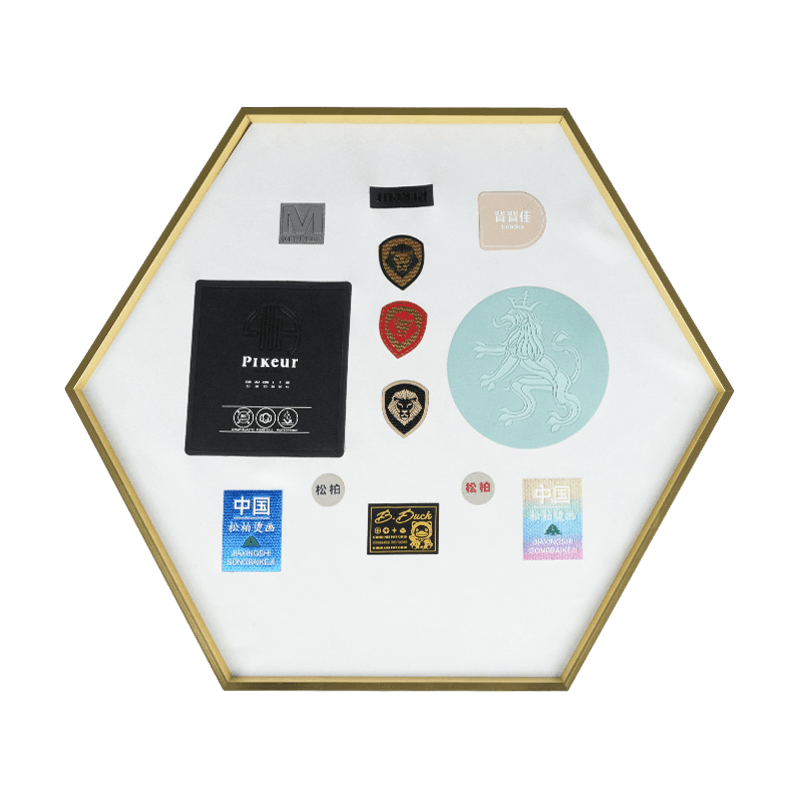
 UV-Sensitive Photochromic Seamless Tag for Outdoor ApparelA thin, heat-transfer label that changes color with UV intensity while preserving lightweight garment feel and supporting custom brand, shape, and fabric options.View Product →
The sensing layer usually relies on photochromic chemistry: molecules that rearrange when they absorb UV photons and revert when the light source disappears. A label may carry one pigment that deepens as irradiance rises, or several pigments that step through a color sequence.
A three-stage design is the easiest for consumers to understand, and it maps cleanly onto everyday decisions outdoors.
| Indicator state | Typical UV condition | Suggested wearer action |
|---|---|---|
| Pale, faint tint | Low irradiance, early morning or heavy cloud | Normal outdoor activity |
| Clear, saturated color | Moderate to high irradiance, midday | Reapply sunscreen, consider a hat |
| Deep, fully developed color | Very high irradiance, prolonged exposure | Seek shade, cover up, limit time in direct sun |
UV-sensitive labels respond to ambient ultraviolet radiation. They are not calibrated dosimeters and they do not measure the UPF rating of the surrounding fabric. They also do not replace laboratory UV transmission testing, sunscreen claims or regulatory labeling. Their value is behavioral: they make an invisible hazard visible, which is exactly what drives repeat wear and word of mouth in outdoor categories.
Activewear stretches, sweats and gets washed constantly. A label that feels fine in the fitting room but curls after ten washes becomes a warranty issue, and a raised edge on a shoulder strap becomes a chafing complaint.
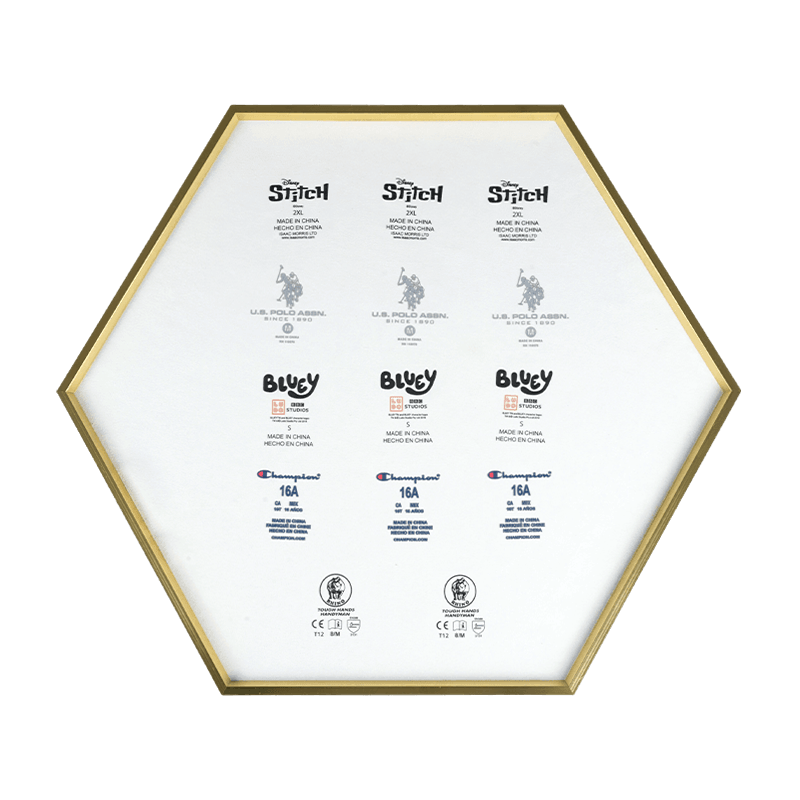
Seamless application removes the two classic irritants of conventional labeling: cut edges that harden in the wash, and stitch lines that press into the skin under a backpack strap or sports bra. This is why the same construction logic already dominates tagless size and care labeling in children's and performance apparel.
The indicator must survive elongation without cracking. Heat transfer, silicone and printed-trim routes each behave differently on four-way stretch knits, and the choice affects how sharply the color change reads once the garment is on a moving body. Bonding temperature, dwell time and carrier film selection all influence how the pigment layer sits on the fabric surface.
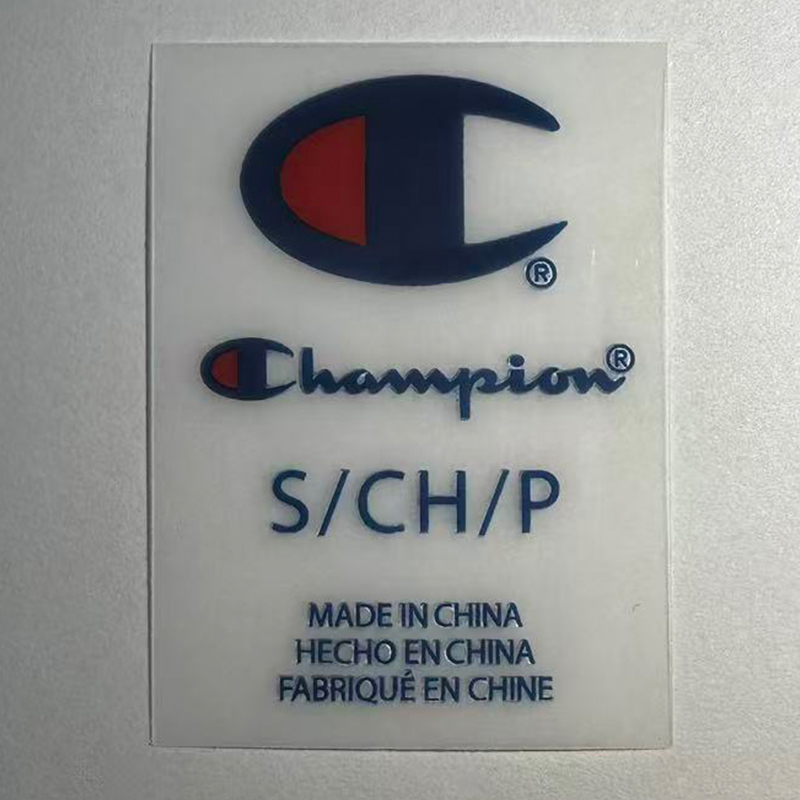 Seamless Printed Size and Care LabelsTagless heat-transfer labels print logos, sizing, and care details directly on fabric, offering soft, wash-durable branding for stretch apparel and intimate wear.View Product →
Where the indicator sits determines whether anyone actually uses it. Placement changes visibility, garment cost and the reliability of the color reading.
| Placement | Visibility | Notes |
|---|---|---|
| Outer forearm | High | Easy self-check while running or cycling |
| Chest or shoulder | Medium to high | Readable by others, well suited to team kit |
| Sleeve cuff | Medium | Moves with the arm, common on jerseys |
| Upper back | Medium | Less reachable, needs a mirror or a partner |
| Hem or side seam | Low to medium | Discreet, useful for kidswear and swimwear |
Designers should also consider whether the indicator shares space with size, care or branding information. Combining a UV indicator with a tagless size print keeps the interior clean and reduces total trim count, which simplifies both sewing and inventory.
Because these labels live on the outside of a garment or against the skin, durability testing should be defined before the first sample is approved. A practical evaluation checklist includes:
Transfer-based trims are frequently chosen for this kind of application because adhesion and finish can be tuned to the fabric. Our article on how transfer technologies affect label durability covers the underlying process variables in more detail.
Sun monitoring is the entry point, but the same seamless sensing platform extends into other outdoor and care scenarios.
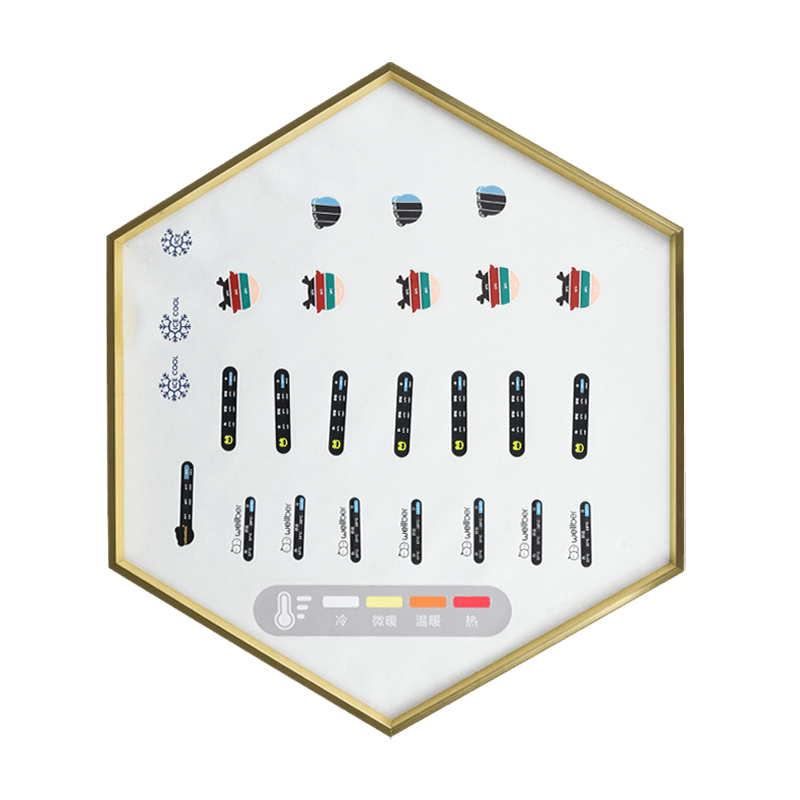
Adjacent sensing trims follow the same architecture. Thermal-sensing variants, for example, respond to body heat rather than sunlight, which is useful in children's garments where over-heating is a concern.
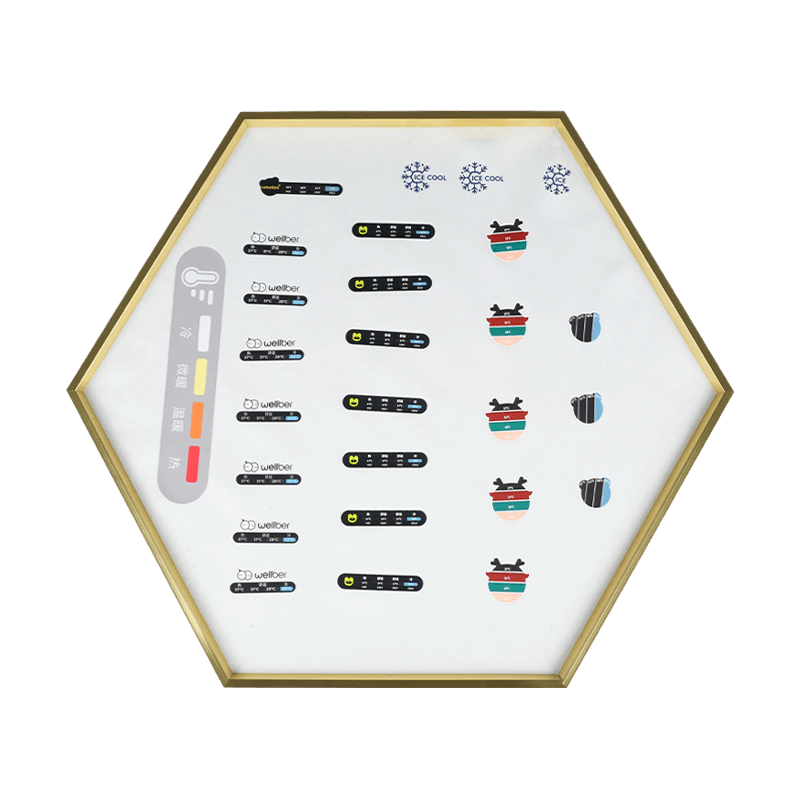 Thermochromic Thermal-Sensing Seamless Tag for Children's ApparelA soft, heat-transfer label using thermochromic color change and a Cold-to-Scalding scale to help parents monitor children's comfort without sewn-in tags.View Product →
Functional trims are easiest to integrate when they are treated as part of the tech pack from the start. That means specifying the indicator color range, the activation threshold, the placement coordinates, the print or transfer method, and the wash test protocol before sampling begins.
Brands working with an in-house label manufacturer can usually compress this cycle, because the same supplier controls material selection, transfer production and finishing. Reviewing our label printing and heat transfer operation is a reasonable first step if you want to understand how raw material control affects consistency across large orders.
Practical steps for a first run:
It is a tagless functional label with an integrated UV-sensitive indicator. It is applied flat to the fabric and changes color as ultraviolet intensity rises, giving the wearer a visible cue about sun exposure.
Photochromic pigments are designed to reverse repeatedly, but service life depends on the ink system, the fabric and the wash program. A controlled wash test on the actual garment is the only reliable way to set a durability claim.
Within limits. The activated color must remain clearly distinct from the resting state, and very dark base shades reduce readability. Most projects use two to four approved states rather than an unlimited palette.
No. They are behavioral aids that respond to ambient ultraviolet light. Fabric protection should still be validated through laboratory testing, and sun-safety guidance should still be followed.
Placement depends on the sport. Forearm and cuff positions suit self-checking during running and cycling, while chest, shoulder and hem placements work better for team kit, kidswear and swimwear.

[email protected]

+86-18967386982

Manager Yu

3rd Floor, Building 15, Xinhua Road, Baibu Town, Haiyan County, Jiaxing City, Zhejiang Province, China