+86-18967386982

 English
 Español
 عربى
عربى
Home / News / Industry News / Tagless Labels vs Woven Labels: Which Is Better for Your Clothing Brand?
Industry News


The scratchy tag at the back of a shirt collar has been a minor irritation for most of human clothing history. It wasn't until major apparel brands started removing woven labels and replacing them with heat-transferred tagless prints that most people realized there was an alternative. Today, tagless labeling is standard across activewear, childrenswear, and premium basics — but woven labels haven't disappeared, and for good reason. The right choice depends on what you're making, who you're selling to, and how much the label itself contributes to your brand identity.
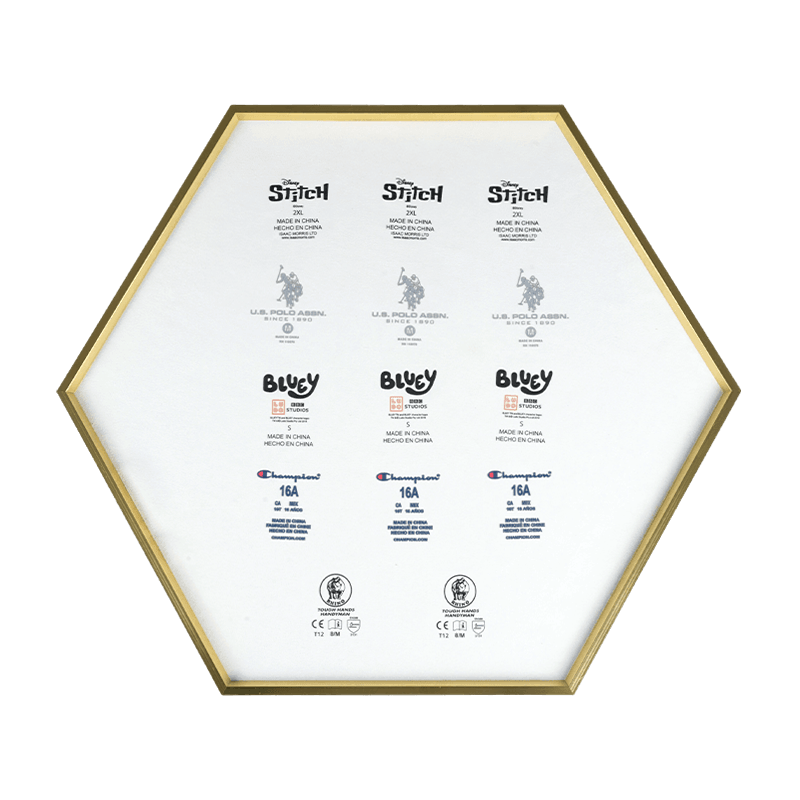
A tagless label — also called a heat transfer label, or HTL — is applied directly to the fabric using heat and pressure rather than being sewn in. The print is transferred from a carrier film onto the garment surface, typically on the inside back neck or inside waistband, during the finishing stage of production. Once applied, it sits flush with or slightly above the fabric surface. There's no separate component to catch on skin or work its way out of a seam.
The technology behind tagless labels varies. Screen-printed transfers use ink layers applied sequentially to a release carrier. CMYK digital transfers print photographic-quality images directly. Silicone transfers build up a tactile, slightly raised surface that holds color exceptionally well through washing. Each has different characteristics in terms of what the final label looks and feels like on the garment.
What they share: they're all applied with heat, they bond to the fabric rather than sitting inside a seam, and they can't be grabbed and pulled away from the collar the way a sewn label can.
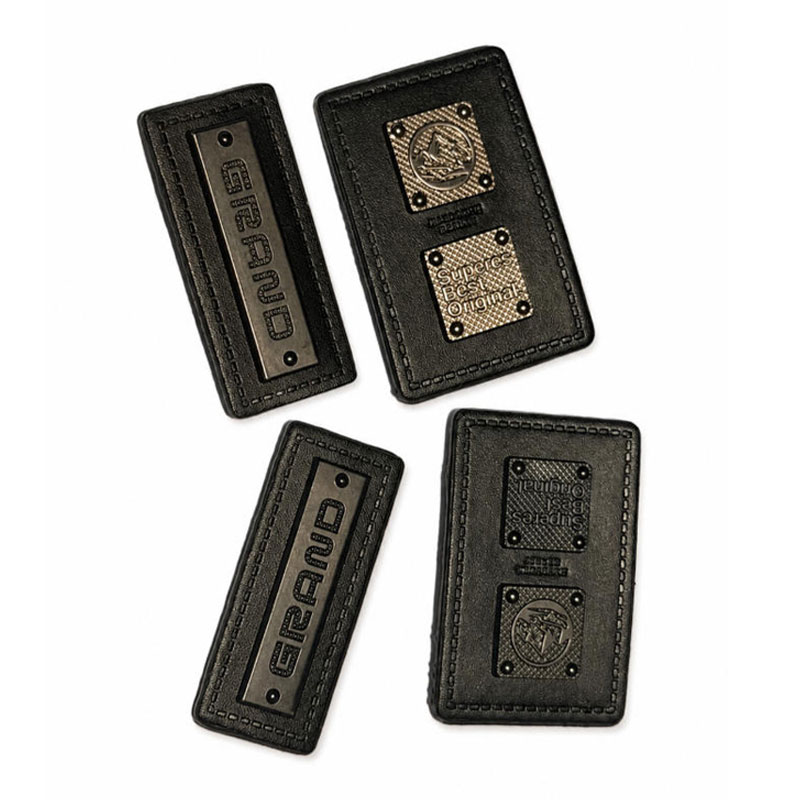
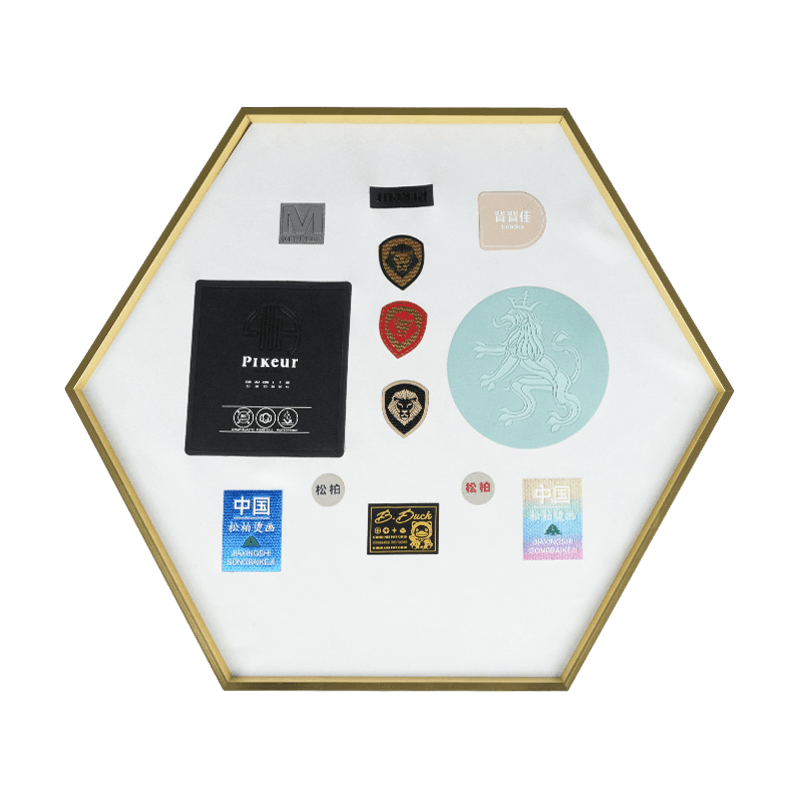
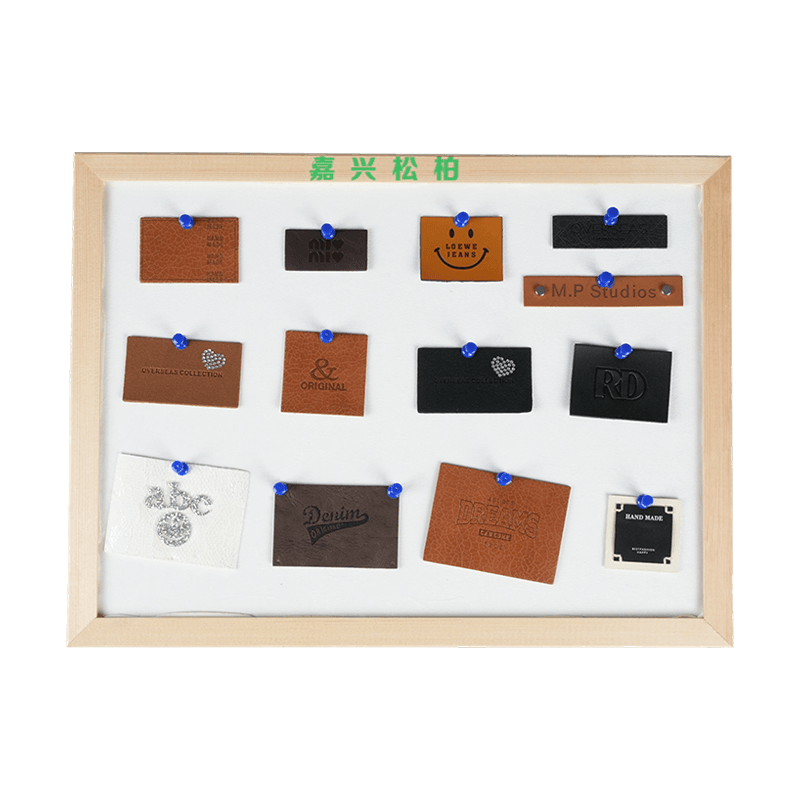
A woven label is exactly what it sounds like: a small piece of fabric woven with a design, typically on a Jacquard loom, then sewn into the garment during manufacturing. The threads are the design — there's no ink or transfer involved. Because the image is structurally part of the label fabric, it doesn't fade, peel, or wear away. A woven label on a well-made garment looks essentially the same after a hundred washes as it did when it left the factory.
That permanence is why woven labels remain standard in tailored clothing, outerwear, denim, and heritage brands. The label isn't just information — it's a physical object that signals quality and durability. A stiff woven patch with a brand logo in metallic thread conveys something that a printed transfer doesn't, regardless of how good the print quality is. The materiality matters to certain customers in certain market segments.
The practical limitation is comfort. Even a well-made woven label with neat edges has a firm woven structure that can be felt against the skin, particularly at the neckline. In activewear, children's wear, and anything worn directly against the skin for extended periods, that physical presence is a problem. Kids in particular tend to notice and react to label discomfort more than adults do — and parents buying children's clothing have learned to check for tagless products.
| Tagless Heat Transfer Label | Woven Label | |
|---|---|---|
| Application method | Heat press during finishing — no sewing required | Sewn in during garment assembly |
| Skin contact comfort | Excellent — flat or no-feel surface | Firm woven edge detectable against skin |
| Color capability | Full color — photographic quality possible with CMYK | Limited by thread count — complex gradients not feasible |
| Durability through washing | Good — 30–50+ wash cycles for quality products; varies by transfer type | Excellent — colors woven in; no fading over garment lifetime |
| Perceived quality signal | Clean, modern — signals performance/casual | Traditional, tactile — signals craftsmanship/heritage |
| Minimum order quantity | Lower — digital transfers can run smaller quantities | Higher — loom setup costs favor larger runs |
| Design change lead time | Short — digital file update, no tooling | Longer — new pattern requires loom reprogramming |
| Production integration | Applied post-assembly — can be outsourced separately | Sewn in during assembly — requires coordination with sewing line |
| Fabric compatibility | Requires a smooth, flat application surface — challenging on some textures | Compatible with any fabric that can be sewn |
| Best garment types | Activewear, childrenswear, basics, underwear, sportswear | Outerwear, tailoring, denim, heritage/premium casual |
This is where brands sometimes get disappointed with tagless labels: they specify a transfer label, get samples that look great, then hear back from customers that the print started cracking or peeling after 20 washes. The issue is seldom the technology itself — it's the transfer specification not matching the wash conditions and fabric type.
Tagless transfers for activewear — which get washed more frequently, often at higher temperatures, and sometimes with harsher detergents — need to be specified differently from transfers for a fashion t-shirt. The ink system, the bonding chemistry, and the finish all need to be matched to the end-use conditions. Silicone transfers, for example, handle repeated high-temperature washing significantly better than standard plastisol-based ink transfers. Transfers for polyester performance fabrics need different adhesion chemistry than transfers for cotton basics.
A good supplier will ask about wash care requirements, fabric composition, and washing frequency before recommending a transfer specification. If they don't ask, that's a red flag. A wash test on production-quality samples — not just prototypes — before committing to a production run is standard practice.
Tagless labels are the clear choice for anything worn directly against the skin for extended periods: activewear, sportswear, childrenswear, underwear, base layers, swim. The comfort advantage is real, and customers notice it. For these categories, appearing without a tagless label is increasingly a disadvantage — shoppers in the children's and activewear segments have come to expect it.
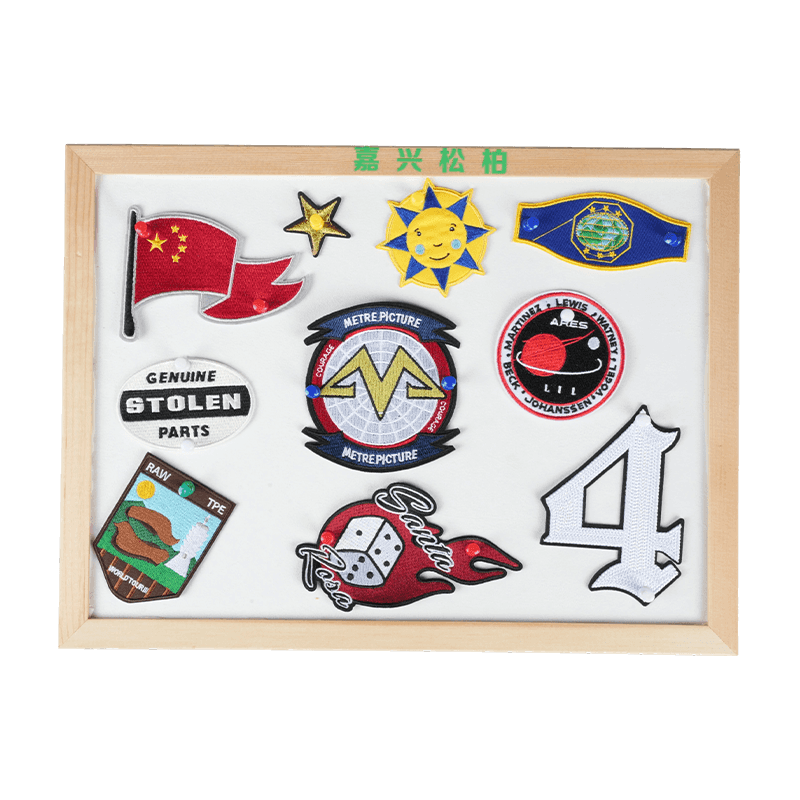
Woven labels work better when the label is a visible branding element rather than just information. A woven patch on the chest of a jacket, a label at the outside waistband of a pair of jeans, or a heritage-brand logo sewn into the lining of a coat — in these contexts, the physical permanence and tactile quality of a woven label reinforces what the brand is communicating. Replacing a woven chest patch with a heat transfer print would feel like a cost-cutting move to the target customer, even if the transfer quality is technically excellent.
Many brands use both, which is straightforward in practice. The woven label carries the brand logo in a visible location; the tagless transfer handles the size and care information inside the collar. This combination gets the branding benefits of a woven patch without the comfort issues of a woven care label against the neck.
A properly specified and applied heat transfer label should last 30–50 wash cycles minimum for standard residential laundry conditions. Premium silicone and high-quality CMYK transfers from reputable suppliers are rated for 50+ washes. The actual durability depends on wash temperature (cooler is better), detergent type, tumble drying temperature (high heat is the most common cause of premature failure), and fabric type. Transfers on synthetic fabrics like polyester and nylon typically last longer than on natural fibers because the adhesion chemistry bonds more reliably with synthetic fiber surfaces. Always request a wash test certification at the wash conditions relevant to your target care label.
Heat transfer labels work best on smooth, flat fabric surfaces. Dense weaves, smooth jerseys, and flat-woven fabrics are good candidates. Very textured surfaces — heavy fleece, rough canvas, open-mesh fabrics — provide an uneven application surface that compromises adhesion and can cause the transfer to lift at edges. Stretch fabrics require transfers specifically designed for stretch applications, using ink systems and adhesive layers that can flex with the fabric without cracking. Sheer or very thin fabrics can show the transfer through to the outside of the garment at light angles — worth testing before committing to production.
Requirements vary by country and market. In the US, the FTC requires fiber content, country of origin, manufacturer identification, and care instructions. In the EU, fiber composition and country of origin are mandatory; care symbols must follow ISO 3758 (GINETEX symbols). Most markets also require language-specific labeling — English for the US/UK/AU, the official language(s) of the destination country for the EU. A tagless label can carry all of this information in a clean, legible print without the bulk of a multi-fold woven label. For brands selling into multiple markets, the label design needs to accommodate all required languages and symbols within the available label area.
Tagless Size Label | CMYK Heat Transfer | Silicone Labels | Care Label Printing | Get a Quote

[email protected]

+86-18967386982

Manager Yu

3rd Floor, Building 15, Xinhua Road, Baibu Town, Haiyan County, Jiaxing City, Zhejiang Province, China